BNBU Food Science and Technology Ranked in ShanghaiRanking’s Global Ranking of Academic Subjects for Second Consecutive Year
ShanghaiRanking recently released its 2026 Global Ranking of Academic Subjects, with Food Science and Technology at Beijing Normal-Hong Kong Baptist University (BNBU) once again included in the ranking. This marks the second consecutive year that the discipline has been recognized, highlighting its growing international competitiveness and academic influence.
The ShanghaiRanking Global Ranking of Academic Subjects covers five broad fields: natural sciences, engineering, life sciences, medical sciences, and social sciences. Known for its objective evaluation methods and broad international recognition, the ranking is widely used as a reference for assessing the development and performance of academic disciplines worldwide.
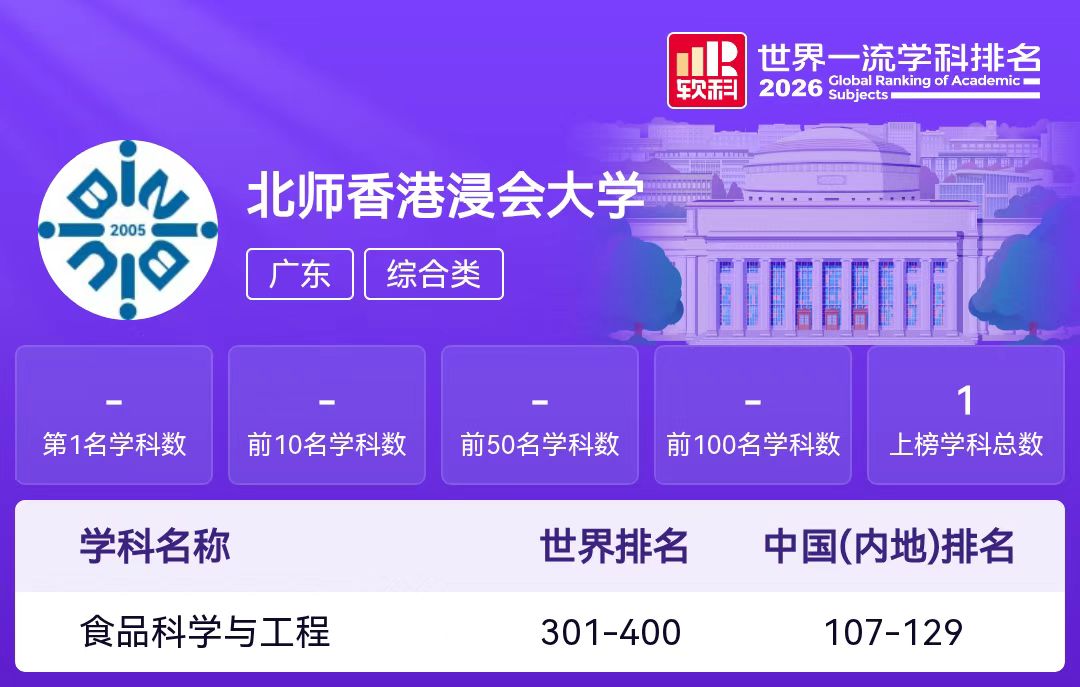
BNBU Food Science and Technology included in the 2026 ShanghaiRanking Global Ranking of Academic Subjects (Screenshot from the ShanghaiRanking website)
BNBU’s Food Science and Technology programme has received increasing international recognition in recent years. Since 2023, it has been included for consecutive years among the top 1% of disciplines worldwide in Clarivate’s Essential Science Indicators (ESI). In 2024, ScholarGPS released its global institutional rankings for Food Science and Technology based on performance over the previous five years, placing BNBU 44th globally and 15th in China.
Beyond its growing academic recognition, BNBU’s Food Science and Technology programme has a strong interdisciplinary focus, bringing together areas such as biology, nutrition, chemistry, materials science, engineering, and agricultural science. The programme aims to prepare students with an international outlook for careers and further study in food production, food safety, health, and related industries. More than 90% of undergraduate graduates from the programme continue to postgraduate study. Among students who pursued further studies between 2024 and 2026, 60.2% were admitted to universities ranked among the QS World University Rankings Top 20, while 81.6% entered QS Top 50 universities. These institutions include Imperial College London, National University of Singapore (NUS), University College London (UCL), University of Hong Kong (HKU), Nanyang Technological University (NTU), Cornell University, University of Melbourne, Johns Hopkins University, and many others. The programme also provides a strong research environment for undergraduate students. To date, students have published more than 100 research papers indexed by the Science Citation Index (SCI) as first authors, including articles in leading journals in the field, such as Trends in Food Science & Technology, Critical Reviews in Food Science and Nutrition, and Food Chemistry.
The programme is supported by a faculty team with extensive international academic and research experience, led by Chair Professor Baojun Xu, a Fellow of both the Royal Society of Biology and the Royal Society of Chemistry, and a Chartered Chemist. All faculty members in the discipline received their doctoral degrees from universities outside mainland China and have research experience at well-known universities and research institutions in the United States, Canada, Switzerland, South Korea, Malaysia, and Hong Kong SAR. Seven faculty members have led five projects funded by the National Natural Science Foundation of China and 14 provincial- or ministerial-level research projects. The team has published more than 450 SCI-indexed papers affiliated with BNBU, been granted more than 10 invention patents, and published 15 academic books. Faculty members have also received eight recognitions under various talent programmes. Additionally, some faculty members have been repeatedly included in international researcher rankings, including the ScholarGPS Highly Ranked Scholars list, Stanford University’s World’s Top 2% Scientists list, Research.com’s Best Scientists ranking, and Elsevier’s Highly Cited Chinese Researchers list, reflecting their international research impact. The team has also worked with Hong Kong Baptist University (HKBU) to develop a microfluidic flow cytometry system for cellular and molecular testing. The project received funding from the Hong Kong SAR Government’s Research, Academic and Industry Sectors One-plus Scheme (RAISe+ Scheme) under the Innovation and Technology Commission, demonstrating the programme’s strength in translating research into practical applications.
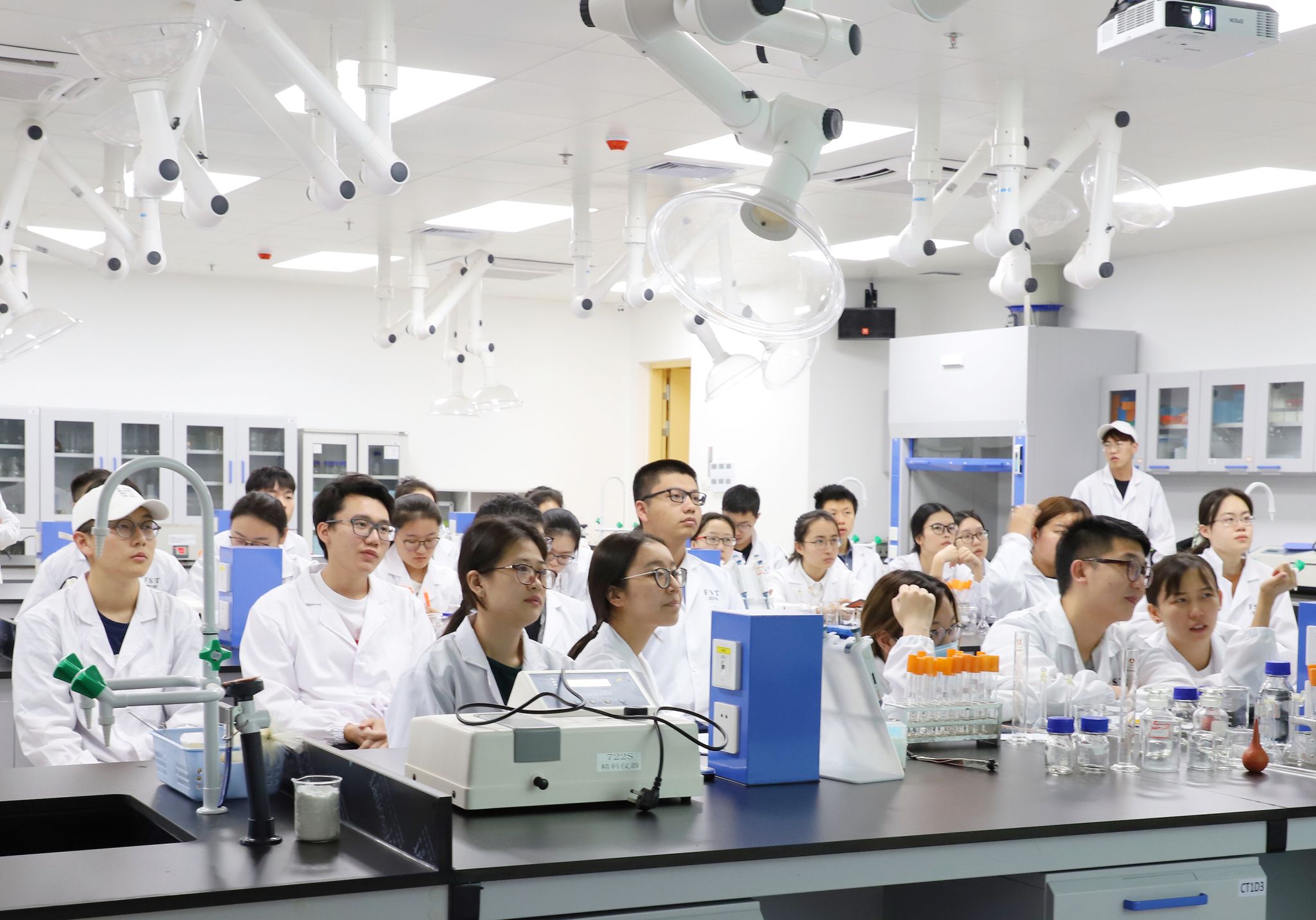
The programme is supported by several major research platforms, including the Guangdong Provincial Key Laboratory of Interdisciplinary Research and Application for Data Science (IRADS), the Zhuhai Key Laboratory of Agricultural Product Quality and Food Safety, and the BNBU Food Safety Testing Center. Together, these facilities offer a comprehensive research environment, with laboratories equipped with more than 200 sets of major research instruments to support systematic research in food nutrition and health, food safety testing, and the digitalization of food processing.
Being included in the ShanghaiRanking Global Ranking of Academic Subjects for the second consecutive year represents further recognition of the progress made by BNBU’s Food Science and Technology programme in recent years. Looking ahead, the programme will continue to strengthen student education, research and innovation, and academic development, while promoting collaboration across disciplines. It will also further enhance its contribution to society and regional development and continue building long-term academic strength.
