
On 22 April 2026, the Department of Life Sciences at Beijing Normal–Hong Kong Baptist University (BNBU) invited Prof. Jürgen Brugger, a member of the Swiss Academy of Engineering Sciences (SATW) and a Professor of Microengineering at École Polytechnique Fédérale de Lausanne (EPFL), to deliver a lecture titled “Beyond the Mask: Direct-Write Nanofabrication and Immersive Learning for Next-Generation Microsystems.” The lecture was moderated by Dr. Ya Wang, Associate Professor of the Food Science and Technology Programme.
Prof. Brugger is Professor of Microengineering at EPFL and is also affiliated with Materials Science. He leads the Microsystems Laboratory (LMIS1). His research covers micro- and nanofabrication, microelectromechanical systems (MEMS), wearable systems, and biomedical devices. He has received wide recognition in these fields, including IEEE Fellow (2016), ERC Advanced Grant (2017), and MNE Fellow (2022). In 2024, he was elected as a member of the Swiss Academy of Engineering Sciences (SATW).
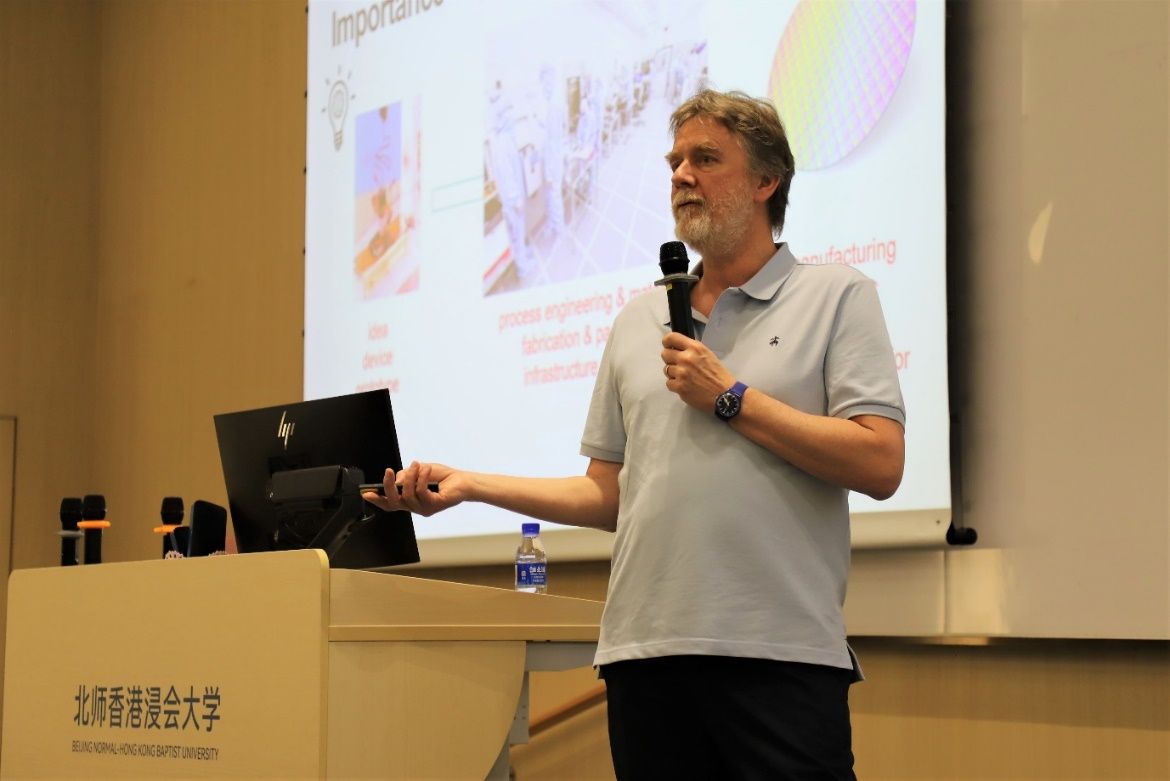
Prof. Brugger Delivering the Lecture
During the lecture, Prof. Brugger introduced direct-write nanofabrication technologies that go beyond the limits of conventional mask-based processes. He outlined key development trends in this area and discussed their potential applications in next-generation microsystems. He pointed out that, as device structures and application scenarios become more complex, micro- and nanofabrication is moving from traditional mask-based approaches toward more flexible direct-write and hybrid processing methods. These developments are opening up new possibilities for materials, structures, and device design.
Drawing on his team’s recent work, Prof. Brugger presented several representative fabrication methods, including nanostencil lithography, inkjet printing, and thermal scanning probe lithography. He also shared research progress in areas such as sensor fabrication, biodegradable microsystems, energy harvesting devices, and engineering for two-dimensional materials. In addition, he noted that immersive digital tools and mixed-reality environments are creating new possibilities for cleanroom teaching and engineering training, helping students understand the principles and operational logic behind micro- and nanofabrication in a more intuitive way.
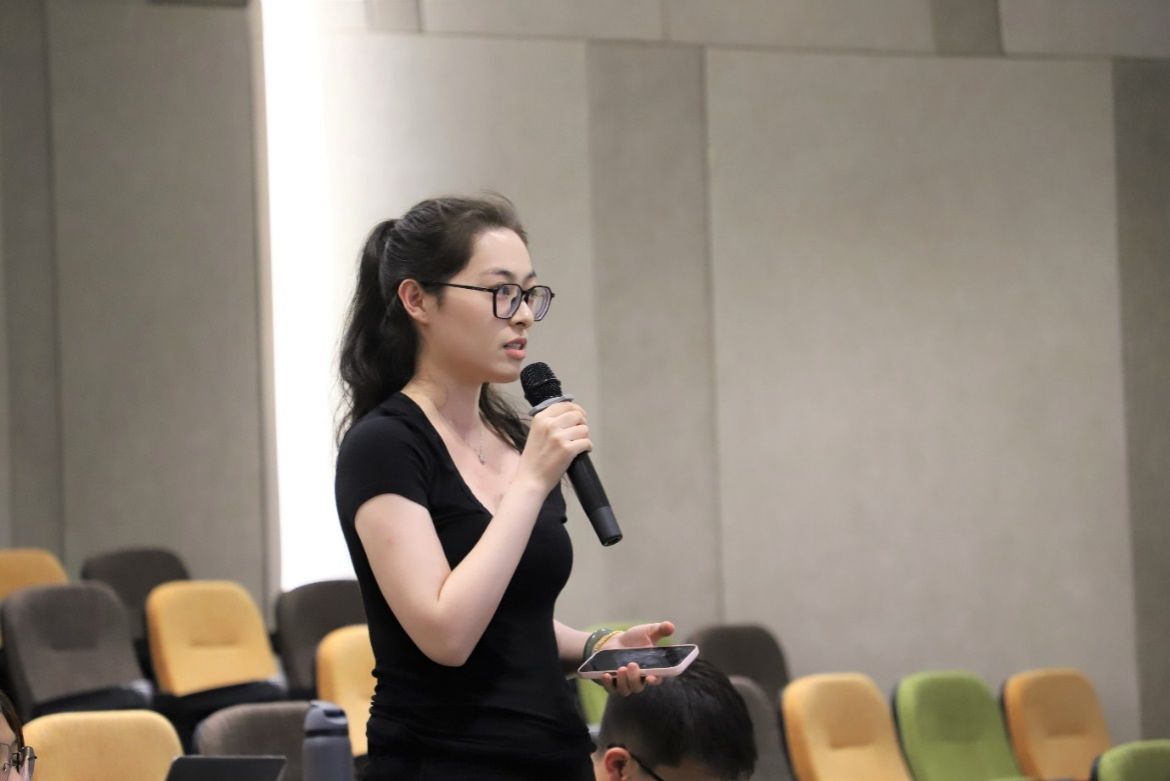
Student asking questions during the Q&A session
During the discussion session, teachers and students exchanged views with Prof. Brugger on topics including the application potential of nanofabrication technologies and the integration of manufacturing processes with teaching and training. After the lecture, Dr. Ya Wang presented a souvenir to Prof. Brugger on behalf of the University, and the guest speaker took a group photo with teachers and students attending the event.
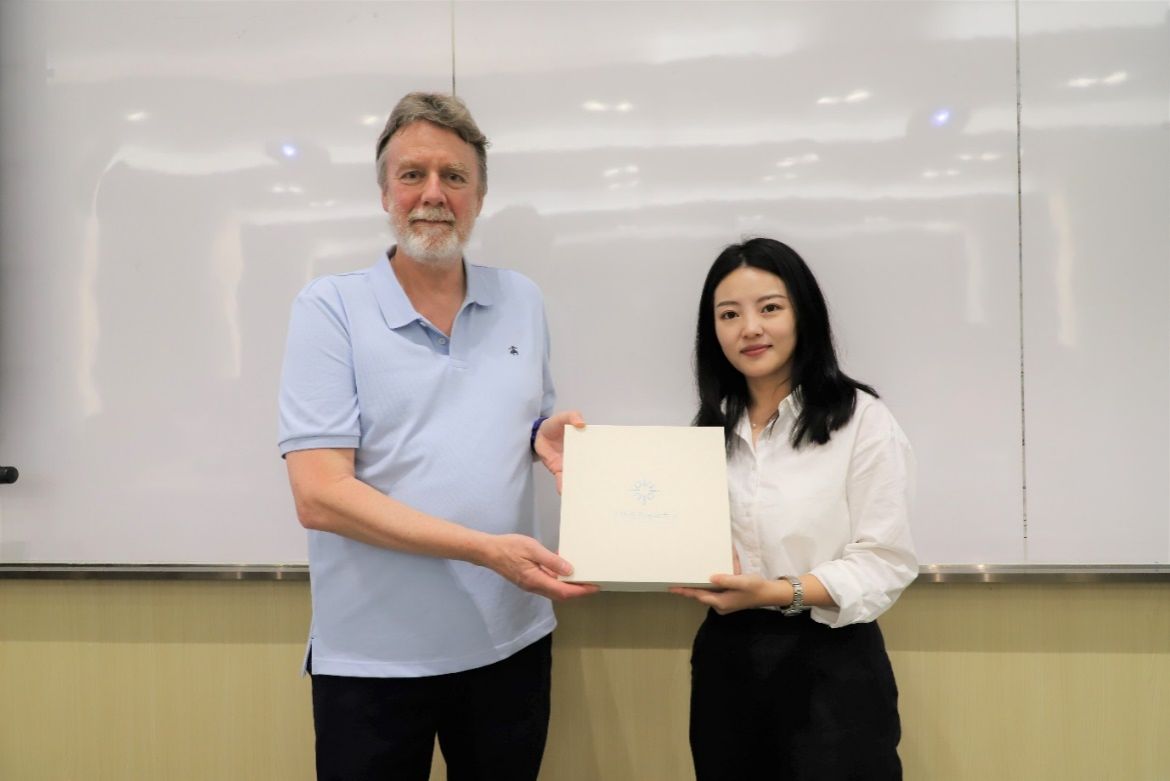
Dr. Ya Wang Presenting a BNBU Souvenir to Prof. Brugger
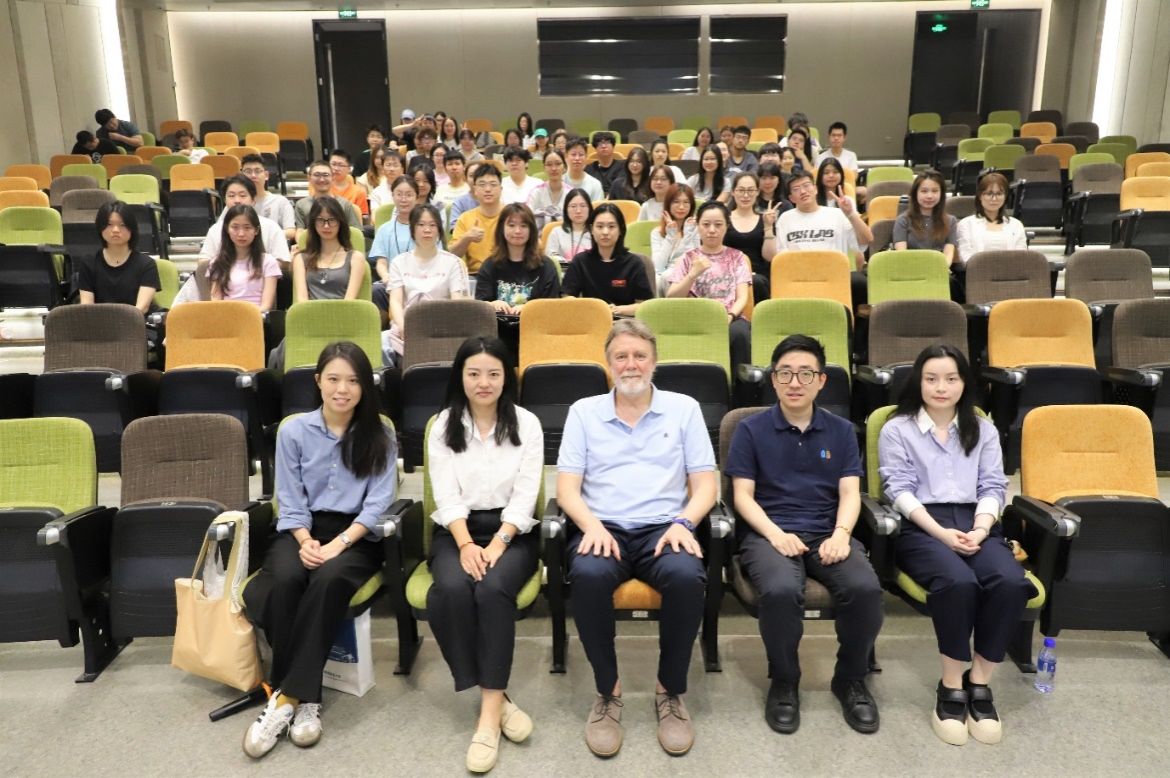
Group photo with faculty members and students
The lecture introduced recent explorations at the intersection of micro- and nanofabrication and immersive learning. It helped participants gain a deeper understanding of related research directions and provided useful reference for future teaching and academic exchange in related fields at BNBU.
From DLS

